Home › Services
Sealcoating in Columbia SC that slows the sun instead of hiding damage
Sealcoating is one of the most misunderstood jobs in the asphalt trade. Done at the right time on sound pavement, it shields the binder from the harsh Midlands sun, sheds rain and blocks the oil and gas drips that soften asphalt. Done on a driveway that is already breaking apart, it is paint on a failing wall. This page covers what a sealer really does, the difference between coal-tar and asphalt-emulsion products, the prep that decides whether a coat lasts, how weather around Columbia affects application and cure, and how often sealing actually pays off. If your surface is a candidate, the contact page is where to send photos and the address.
What a sealcoat is, and what it is not
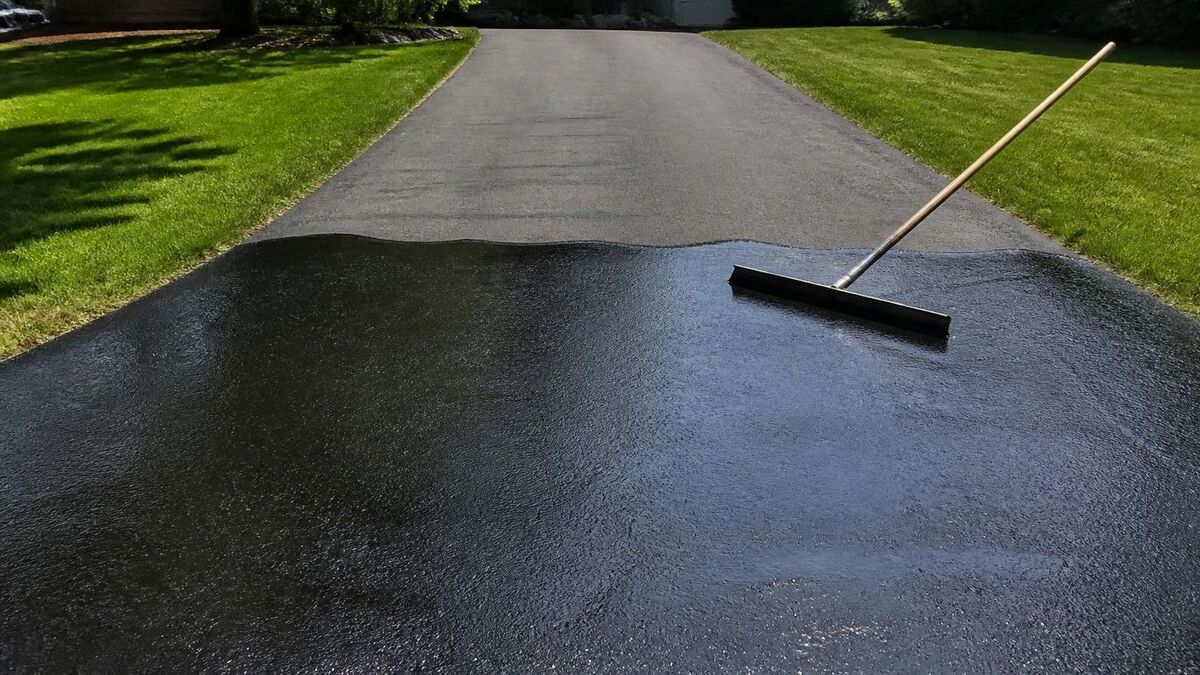
A sealcoat is a thin liquid layer, usually a mix of a binder base, water, fine mineral filler and sand, spread over the top of existing asphalt. It dries into a dark membrane a fraction of an inch thick. Its job is protective: it keeps sunlight and oxygen off the asphalt cement, slows water from soaking into the surface, and resists fuel and oil that would otherwise dissolve the binder. It also brings back the deep black look of new pavement, which is why many people think of it as cosmetic.
It is not a structural layer. It adds no strength, fills no low spots, levels no ruts and does nothing for a soft or failing base. It will not bridge open cracks or hold together an area of alligator cracking. Anyone selling sealcoat as a substitute for repair or resurfacing is selling the wrong product.
Why Southern sun and heat age asphalt so quickly
Asphalt pavement is stone held together by asphalt cement, a petroleum binder that stays flexible when it is fresh. Ultraviolet light and oxygen gradually harden that binder in a process the trade calls oxidation. As it hardens, the surface fades from black to a dull gray, loses its grip on the fine aggregate, and starts to shrink and crack.
The Midlands give oxidation plenty to work with. Long summers, many cloudless afternoons and pavement surface temperatures that climb far above the air temperature all speed the reaction. Then an afternoon storm drives water into every hairline opening. A sealcoat applied before the surface turns chalky slows that whole process, which is why timing matters more than the product label.
Coal-tar sealers versus asphalt-emulsion sealers
Two families of sealer dominate the market, and a good proposal names which one is being used.
Coal-tar sealers are made from a byproduct of turning coal into coke. They resist gasoline and oil well and hold up to sun, which made them a long-time favorite for commercial lots. They also contain high levels of compounds that raise health and environmental concerns, they can irritate skin and eyes during application, and some jurisdictions around the country restrict or ban them. Asphalt-emulsion sealers use refined asphalt cement suspended in water. They have a lower odor, are easier to work with around homes and landscaping, and are the common alternative wherever coal tar is restricted. Their resistance to fuel spills is lower, which matters at gas pumps and busy drive lanes more than on most residential driveways.
Acrylic and polymer-modified products are also sold for appearance and toughness. Whatever the choice, the manufacturer's mixing instructions matter more to performance than the brand name.
Sand, polymers and the mix in the tank
Most sealcoat is applied with sand blended into the mix. The sand gives the dried film texture so tires and shoes do not slip when it is wet, adds a little wear resistance, and helps the coat build thickness. Too little and the surface turns slick in a storm. Too much and the coat becomes brittle and wears off quickly.
Additives can change performance as well. Latex or polymer additives help the film flex and resist wear, and drying agents can help in cooler or more humid weather. Water dilution is a balancing act: some water is needed to spread the material, but too much thins the protective solids. A contractor who can explain the chosen mix ratio is usually paying attention to the details that make a coat last.
Preparation decides most of the result
A sealcoat can only stick to clean, sound asphalt. Most early failures, such as peeling, flaking or tracking, trace back to prep that was rushed. A thorough job usually follows this order:
- Trim grass and weeds back from all edges so the sealer reaches the full width and the edge line stays crisp.
- Clean the whole surface with power brooms, blowers or a sweeper to lift dirt, sand, leaves and pine straw, which builds up quickly on many Midlands properties.
- Scrape and wash away any heavy buildup of oil, clay tracked in from a yard, or tree sap.
- Treat oil and fuel stains with an oil-spot primer. Sealer will not adhere over oil, and the stain will bleed through or peel the coat if it is skipped.
- Seal open cracks and complete any patching so the sealcoat goes over a continuous surface.
- Mask or protect concrete walks, garage slabs, curbs, brick and anything else the sealer should not touch.
Seal the cracks before you seal the surface
Sealcoat is too thin to fill a crack. Spread across one, it forms a skin that cracks again within weeks and leaves the opening exposed to water. That is why crack sealing comes first. Working cracks are typically cleaned and filled with a hot-applied rubberized sealant that can stretch with the pavement, then given time to firm up before the coat goes on.
Wider cracks may need routing to create a clean reservoir for the sealant, and areas of interconnected cracking or breakage need a patch, not crack filler. Those methods and how to tell the difference are explained on the asphalt repair page. A sealcoat proposal that does not mention cracks at all on an aging surface is missing a step.
Squeegee or spray: how the coat goes down
There are two main ways to apply sealer, and many contractors use both on the same job.
Squeegee application pushes the material across the surface by hand or with a machine-mounted blade. The pressure works sealer down into the surface texture and pores, which is helpful on older, more open pavement. It tends to give a heavier, more even first coat. Spray application uses a pump and wand or a spray bar to lay down a uniform film quickly, which suits large lots and a second coat. On a breezy day, spray can drift onto landscaping, cars and siding.
Two thin coats generally outlast one thick one. A thick single coat may dry on top while staying soft underneath, and it can crack or peel as it cures. Heavy-wear lanes sometimes get a third pass.
Weather windows and cure time around Columbia
Emulsion sealers cure by losing water, so weather controls the schedule. They need warm air and pavement, sun if possible, and no rain in the forecast for long enough that the film can set. Most product instructions call for a minimum temperature and rising temperatures through the day, which is why work tends to start mid-morning rather than at sunrise.
That gives the Midlands a long season from spring into fall. Two local wrinkles matter. The first is the summer pop-up storm: a sunny morning can turn to a downpour by mid-afternoon, and rain on fresh sealer washes it off and leaves streaks. The second is humidity, which slows drying even on a warm day. Late fall and winter work is possible on the right days, but nights that drop near freezing make it risky. A crew that reschedules on an uncertain forecast is showing care.
- Foot traffic usually returns sooner than vehicles, and the contractor will give a specific time for each.
- Vehicles typically stay off for at least a day, and longer in cool or humid conditions.
- Turning wheels sharply while parked on fresh sealer leaves scuff marks for weeks.
- Sprinklers should be shut off before application and for a while afterward.
How often should asphalt be sealed?
New asphalt needs time to cure before it is sealed. The light oils in fresh pavement need to evaporate, and the trade commonly waits several months to a year before the first coat. Sealing too early can trap those oils and leave a soft surface.
After that first coat, the interval depends on sun exposure, traffic and how the surface is used. A shaded residential driveway with two cars may go several years between coats. A sunny church lot or retail parking area with constant turning traffic may need attention more often. The best guide is the surface: once the black fades toward gray and more aggregate shows, it is time to look again.
More is not better. Sealing every year on a lightly used driveway builds up layers that can crack, peel and turn slippery. Many contractors recommend skipping a cycle if the previous coat still looks dark and intact.
When sealcoating is wasted money
The honest answer to whether a surface needs sealing is sometimes no. Save your budget for the right work if any of these apply:
- Alligator cracking, potholes or soft spots cover a large part of the surface. Those need repair or replacement first.
- The pavement is badly raveled and loose stone is everywhere. A sealer cannot glue it back together.
- Water stands in low spots for hours after rain. The coat will fail there, and the drainage needs to be fixed.
- The asphalt was laid only weeks ago and has not cured.
- The previous coat is still dark, intact and firmly stuck to the pavement, so a new layer would only add thickness.
- The surface is due for an overlay or reconstruction within a year or two anyway.
Cost drivers and what the proposal should say
Sealcoating is priced after the contractor measures the surface and sees its condition. The total area, the amount of crack sealing and oil-spot treatment needed, the number of coats, the product and additives chosen, how much hand edging is required around walks and curbs, access for equipment, and whether a business lot must be done in sections to stay open all affect the figure. Restriping after the coat is a separate item on commercial lots, and parking layout is covered on the parking lot paving page.
A clear proposal names the sealer type, the dilution and sand content, the number of coats, the prep steps including crack sealing and oil-spot priming, how long traffic stays off, what happens if rain hits during cure, and the workmanship coverage offered. Comparing two bids is only fair when they describe the same work.
Scheduling sealcoating in Columbia and the Midlands
Sealcoating requests come from all over the region, including established neighborhoods around Irmo and the many newer subdivisions in Lexington. Every community served is listed on the service areas page.
To get started, photograph the surface in good light from a few angles, with close-ups of any cracks, stains or worn patches. Send the pictures and the address on the contact page, so a paving contractor serving the Midlands can arrange a visit to look at the pavement and talk through timing.
Sealcoating: questions people ask
Can I sealcoat my own driveway with buckets from the home improvement store?
You can, and on a small, healthy driveway a careful homeowner can get a decent result. The usual problems are thin store-bought products with lower solids, skipped prep, no crack sealing, and application in weather that is too hot, too cool or too close to a storm. If you do it yourself, clean thoroughly, prime oil spots, fill cracks first, apply two thin coats and give it plenty of time to cure.
Does sealcoating fill or fix cracks in asphalt?
No. A sealcoat is a thin film, and it simply drapes over cracks without filling them. Within a short time the crack opens back up through the coating. Cracks need to be cleaned and filled with a flexible crack sealant before the coat goes down, and wider or heavily branched cracks may need routing or patching. Coating over them mostly hides the problem and can delay the repair the pavement needs.
Why is my new sealcoat peeling or flaking off?
Peeling usually comes down to adhesion. The most common causes are dirt or dust left on the surface, oil spots that were not primed, a single coat applied too thick, rain or heavy dew before the film set, or sealer laid over an older coat that was already loose. Applying sealer to new asphalt that has not cured can also cause trouble. The fix is to remove loose material and reapply correctly.
Is sealcoating safe for pets, kids and my lawn?
Wet sealer should be kept away from people, pets and plants until it cures, because it is sticky, stains skin and fur, and can burn grass where it runs off the edge. Coal-tar products carry more concern because of the compounds they contain, which is one reason many residential jobs use asphalt-emulsion sealers. Once a coat is fully dry, ordinary use is the norm. You can ask for the product's safety data sheet.
Will sealcoating make my driveway slippery when it rains?
It can if the mix has too little sand or if coats have built up over many years. Fresh sealer has a smoother feel than bare asphalt, and a film with no grit can be slick on a sloped driveway after a summer storm. Most contractors blend sand into the sealer for traction, so mention a steep grade up front and the mix can be adjusted.
How soon after new asphalt is laid should it be sealed?
Fresh asphalt needs time for its lighter oils to evaporate and for the surface to harden. Sealing too early can trap those oils, leaving a soft surface that scuffs and dents. The trade commonly waits several months, often closer to a year, depending on the season it was laid and its sun exposure. The paving contractor can say when it is ready.
Talk through your site
Start with the address, what you want done, and a few photographs of the area, including anywhere water sits after a heavy rain.
Related work
Asphalt Paving
New asphalt laid over a properly built base, for homes, churches, shops and small commercial lots.
Asphalt Driveways
Residential driveways built for Midlands sand, red clay, summer heat and the occasional heavy truck.
Asphalt Repair
Potholes, alligator cracking, edge breaks and soft spots, and when patching stops being worth it.
Parking Lot Paving
Lots for churches, offices, shops and apartments: paving, overlays, drainage and striping.
Across the metro
Lexington
A fast-growing town west of the river, with newer subdivisions, long driveways and lake-area lots.
Irmo
Established neighborhoods toward Lake Murray, wooded lots, slopes and aging driveways.
Cayce and West Columbia
Older river-side neighborhoods and small commercial lots where repair and overlay work dominate.
Blythewood
Northeast growth corridor with larger lots, rural roads and long gravel-to-asphalt conversions.