Home › Services
Asphalt repair in Columbia SC, matched to what is actually failing
Asphalt repair around Columbia starts with a question most people skip: why did this spot fail? A pothole near the mailbox, a web of cracks where the delivery truck turns, a crumbling edge along the lawn and a dip that holds water after every afternoon storm all look like damage, yet each points to a different cause underneath. Patch the symptom and the hole comes back next summer. This page walks through the common kinds of distress seen across the Midlands, the repair methods a contractor chooses between, and the point where fixing pieces stops making sense. When you are ready, send the address and a few photos through the contact page.
Read the damage before you pick a fix
Pavement tells you a lot if you look at the pattern instead of the hole. Straight cracks usually trace a joint, a seam between two paving passes, or shrinkage in an older mat. Cracks that interlock like the scales on a gator's back almost always mean the layers underneath can no longer carry the load. A spot that flexes under a tire is a base or subgrade problem, however tidy the top looks.
Location matters as much as shape. Damage in the wheel paths points to traffic and support, damage at a low corner points to water, and breakage along the outer few inches points to an unsupported edge. A good contractor walks the surface, presses on suspect areas, notes where water sits, and asks what vehicles use it before talking about methods.
How potholes form in Midlands pavement
A pothole is the end of a chain, not the start. Water slips through an open crack, soaks the aggregate base and softens the soil beneath it. Each tire that rolls over the wet area pushes the surface down and pumps fine material up and out. Within weeks the support is gone, the asphalt above breaks into chunks, and traffic carries them away.
The region speeds that chain up. Summer thunderstorms can saturate a weak spot quickly. The sandy soils common across much of the Midlands drain fast when clean but can wash out from under pavement once water has a path through them. Red clay does the opposite: it holds water, loses strength while wet and stays soft long after the storm. Either way, the repair has to remove the weakened material, not just fill the cavity.
Alligator cracking means the support underneath is giving up
Fatigue cracking, the trade name for the alligator pattern, shows up where pavement has bent under load more times than it was built for. The asphalt may be sound material sitting on a base that has thinned, loosened or gotten wet, so it flexes with every pass until it breaks into small connected pieces that eventually pop loose.
On a home driveway it often appears where a moving truck, concrete truck or dumpster sat or turned. On a small commercial lot it follows the trash enclosure, the loading door or the main drive lane. Sealing over it hides the problem for a season at best. The lasting fix removes the broken asphalt and failed base and rebuilds that section for the traffic it actually sees.
Other crack types and what each one usually means
Not every crack is a structural emergency. Several patterns come from age, temperature or construction details and respond to lighter treatment when caught early.
- Block cracking: large rectangles from a mat that has hardened and shrunk with age and sun, a sign of oxidation more than overload.
- Edge cracking: breaks parallel to the outer edge, caused by missing side support, thin asphalt at the margin or water collecting along the shoulder.
- Longitudinal and transverse cracks: single lines that often follow paving seams and are the classic target for routing and sealing.
- Reflective cracking: lines in an overlay that mirror cracks or joints in the layer beneath, returning because the movement below never stopped.
- Slippage cracks: crescent shapes at braking and turning spots where the top layer slid on the one under it.
Raveling, rutting and soft spots
Raveling is the surface coming apart one stone at a time as the binder near the top dries out and fines wash away. Early raveling is mostly aging. Advanced raveling leaves a mat too thin and porous to protect what is below, which moves the conversation toward an overlay.
Rutting is a channel along the wheel paths. In a hot climate it can come from the asphalt softening under heavy loads parked in one spot through July and August, or from the base compressing over time. Shoving, a ripple where vehicles brake and turn, is a close cousin. A test cut is sometimes the only way to tell whether the trouble lives in the mix or below it.
A soft spot that gives under a tire or heel almost always means wet or weak material underneath, sometimes from a broken downspout line, leaking irrigation or a buried stump that has rotted. It has to be opened, dried out or replaced, and compacted again.
Repair methods, from quick fill to full-depth rebuild
The right patching method depends on how deep the failure goes and how long the fix needs to last. A proposal should name the method for each area, because cost and lifespan differ widely.
- Throw-and-roll: mix shoveled into a hole and compacted. Fast and useful as a temporary safety fix, but weak edges and wet base stay in place.
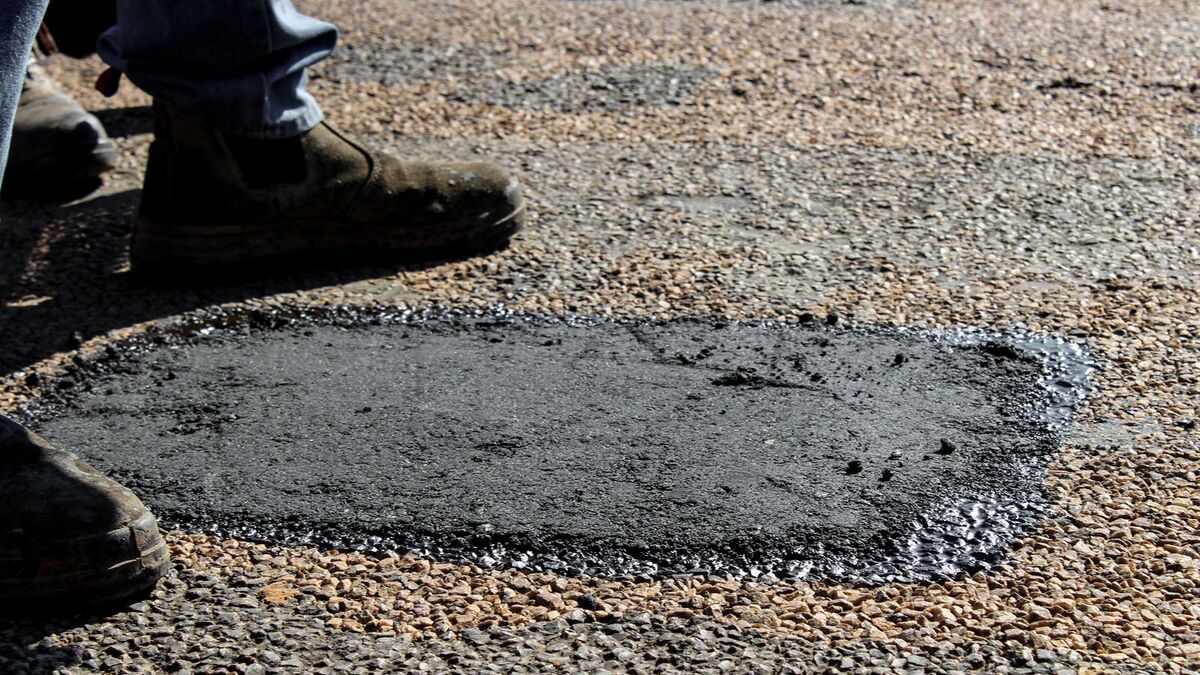
- Saw-cut-and-patch: the area is cut out in a clean rectangle, loose material removed, edges tacked, and new hot mix compacted flush against solid walls.
- Full-depth repair: the cut goes through the asphalt into the base, failed aggregate and wet soil are dug out, new base is compacted, and asphalt goes back in lifts. This is the answer for alligator cracking and soft spots.
- Infrared repair: a heater softens existing asphalt so it can be raked, topped with new material and rejuvenator, and compacted into a seamless patch. Good for surface defects on a sound base only.
- Mill-and-inlay patches: a milling machine removes the top layer over a section and fresh asphalt replaces it, common for raveled or rutted areas on an otherwise solid lot.
Crack routing and hot-pour filling, step by step
Open cracks are the front door for water, so sealing them is one of the cheapest ways to slow other damage. Preparation separates a filler that lasts from one that pops out in a season.
- Mark the cracks worth treating. Hairlines are often left alone, and alligator areas are flagged for patching instead.
- Cut each crack with a router or crack saw into a clean, uniform reservoir with sound walls.
- Blow out dust, sand, roots and moisture with compressed air or a hot-air lance.
- Pour hot-applied rubberized sealant from a heated kettle, finished flush or with a slight band over the top.
- Let the sealant cool and firm before traffic returns, sometimes with a light dusting to stop tracking in the heat.
Repair, overlay or replace: how the decision usually gets made
When patches start covering a large share of the surface, the next step is a judgment call. If the base is sound and damage is limited to cracking and wear, repairs plus a protective treatment are often right. If the surface is broadly worn but the structure holds, an overlay over properly repaired spots can buy many years. If alligator cracking, soft spots and drainage trouble run across much of the area, patches tend to disappear and reconstruction is the honest answer. New construction and rebuilds are covered on the asphalt paving page.
- How much of the surface shows structural distress rather than cosmetic cracking.
- Whether failures follow the wheel paths or appear everywhere.
- Whether water drains away or stands in low spots after rain.
- How long the owner plans to keep the property and how it will be used.
- Whether curbs, garage slabs, drains or the street tie-in limit how much height an overlay can add.
Fix the water problem or the repair will not last
Nearly every recurring failure around here has water in the story: a downspout dumping onto the driveway edge, a lawn sitting higher than the pavement and shedding runoff across it, a low spot at the bottom of a slope, or an irrigation head soaking the same corner nightly. Each keeps the base wet and undoes good patch work.
A thorough proposal looks past the asphalt. It may include regrading soil along an edge, extending a downspout, adding a small swale, cutting back roots lifting a section, or clearing an inlet on a commercial site. Skipping those items is the most common reason the same spot gets repaired three summers running.
Cost drivers and what a solid repair proposal spells out
An honest contractor will not price a repair until they have measured the areas and seen what is underneath. The depth of the failure, the total area and number of separate spots, access for a saw, skid steer, roller and dump truck, any drainage or edge work, phasing on a business lot that must stay open, and hauling of removed material all move the figure.
The written scope should identify each repair area by location and approximate size, the method for each, whether base is being replaced, the patch material, how edges are cut and tacked, any crack routing, drainage work, cleanup and the workmanship coverage offered. A bid that says patch potholes and one that describes full-depth repairs at four marked areas are not the same job.
Once repairs cure, many owners add a protective coat; timing and prep are on the sealcoating page, and busy commercial surfaces are covered on the parking lot paving page.
Getting a repair looked at in Columbia and nearby towns
Repair requests come in from across the Midlands, from older driveways in Cayce and West Columbia to newer homes in Lexington and long rural drives toward Blythewood. The full list is on the service areas page.
Take daylight photos: one wide shot of the whole surface, then close-ups of the worst spots with a shoe or tape measure in frame for scale. A shot right after rain shows exactly where drainage is failing. Send those with the address through the contact page, and the contractor working the region can follow up to schedule a visit.
Asphalt Repair: questions people ask
Is it worth patching a pothole myself with cold patch from the hardware store?
Bagged cold patch works as a temporary safety fix when a hole is catching tires or tripping people. It rarely lasts, because it goes into a hole with crumbly edges and a wet base and never compacts as tightly as hot mix. Expect it to loosen or sink within months. If a hole keeps returning in the same spot, the base needs to be dug out and rebuilt.
Why do the cracks in my driveway keep coming back after I fill them?
Usually the cracks were never cleaned and dried, so the filler had nothing to grip, or the product was a thin pourable filler that cannot stretch as pavement expands in summer heat. Routing, hot-air cleaning and rubberized hot-pour sealant solve both. If the cracks are fatigue cracks from a weak base, no filler will hold, because the pavement keeps moving. Those need a patch.
How long does a hot mix asphalt patch need before I can drive on it?
Hot mix gains strength as it cools, so a patch can often take light traffic within hours on a mild day. In a South Carolina summer it stays soft longer, and a heavy vehicle or a wheel turned while stopped can leave dents and scuffs. The contractor sets the window based on weather, patch depth and expected traffic, and keeping heavy trucks off for a few days is common advice.
Can a contractor fix just the bad section, or does the whole driveway need replacing?
Isolated failures can almost always be fixed on their own with a saw-cut or full-depth patch, which is often the most sensible spend. The math changes when failures cover a large share of the surface, when the driveway has been patched many times, or when water problems run its whole length. A contractor can mark how much of the surface is structurally failing before you decide.
What causes the edges of an asphalt driveway to crumble?
Edges break when nothing supports them from the side. If soil beside the driveway washed away, settled or was never packed against the asphalt, the outer few inches hang unsupported and snap off as tires drift over them. Thin asphalt at the margin and runoff along the edge make it worse. The fix is rebuilding the broken edge, then compacting soil or stone against it.
Is infrared asphalt repair better than a regular patch?
It depends on the defect. Infrared heats the existing asphalt so it can be reworked with new material, leaving no cold seams and a smooth, nearly invisible patch. It suits surface potholes, raised edges, trip hazards and seams on pavement with a sound base. It does nothing for alligator cracking or soft spots, because heating the top cannot fix wet or failed base underneath.
When is the best time of year to have asphalt repaired in the Midlands?
Hot mix places and compacts best in warm, dry weather, which gives the Midlands a long working season from spring into fall. Summer storms can interrupt schedules, and winter cold snaps make good compaction harder. Deep potholes that pose a safety hazard should not wait for the ideal month, though. A temporary fix can hold until a permanent repair fits the weather.
Talk through your site
Start with the address, what you want done, and a few photographs of the area, including anywhere water sits after a heavy rain.
Related work
Asphalt Paving
New asphalt laid over a properly built base, for homes, churches, shops and small commercial lots.
Asphalt Driveways
Residential driveways built for Midlands sand, red clay, summer heat and the occasional heavy truck.
Sealcoating
Sealcoat and crack sealing that slows sun and water damage, and when sealing is wasted money.
Parking Lot Paving
Lots for churches, offices, shops and apartments: paving, overlays, drainage and striping.
Across the metro
Lexington
A fast-growing town west of the river, with newer subdivisions, long driveways and lake-area lots.
Irmo
Established neighborhoods toward Lake Murray, wooded lots, slopes and aging driveways.
Cayce and West Columbia
Older river-side neighborhoods and small commercial lots where repair and overlay work dominate.
Blythewood
Northeast growth corridor with larger lots, rural roads and long gravel-to-asphalt conversions.